
- Trust is built before the first conversation. Your brand, website and LinkedIn either make the call feel safe or make it feel risky.
- First impressions form in a fraction of a second, and many people judge credibility by visual design.
- Authority comes from specific proof: a clear niche, real results, testimonials with names and faces, and visible expertise.
- Consistency is a trust signal in itself. A coherent brand across every touchpoint looks established and reliable.
Coaching is a high-trust purchase. A client is about to share their career doubts, their leadership struggles or their health, and pay for the privilege. Before they book, they ask themselves one quiet question: can I trust this person?
The answer is usually formed before you say a word. This article explains how trust and authority are built online, and how to design them into your coaching brand.
Why trust is the real conversion problem for coaches
When a coach tells us "I get website visitors but nobody books", the cause is rarely traffic. It's trust. People arrive, look around and don't feel confident enough to take the next step.
Research on first impressions shows how quickly this happens. A study by Lindgaard and colleagues (2006) found that people form a judgement about a web page's visual appeal in around 50 milliseconds. The Stanford Web Credibility Project found that the most common factor people mentioned when assessing a website's credibility was its overall look and design. Fair or not, people use design as a shortcut for professionalism.
The difference between trust and authority
| Trust | Authority | |
|---|---|---|
| The question it answers | "Is this person safe and reliable?" | "Is this person an expert in my problem?" |
| Built by | Professional design, consistency, real faces, clear process, testimonials | Specific niche, results, published thinking, credentials, media and speaking |
| Lost by | DIY visuals, broken links, outdated content, vague promises | Generic messaging, trying to help everyone, no proof |
You need both. Trust makes people comfortable; authority makes them choose you over the other qualified coaches they are comparing.
7 trust signals every coaching brand needs
1. A professional, consistent visual identity
A distinctive logo, a considered colour palette and consistent typography tell visitors you take your business seriously. When your website, LinkedIn banner, slides and e-books all look like they belong together, you look established, even if you launched last year.
2. Real photos of you
Coaching is personal. Warm, professional photos of you (not stock images of people shaking hands) help prospects imagine working with you. Use the same photo style across your website and LinkedIn.
3. Specific positioning
"Leadership coach for newly promoted engineering managers" builds more authority than "executive coach". Specificity signals that you understand a particular client's world.
4. Testimonials with names, roles and faces
Anonymous quotes ("J., London") carry little weight. Testimonials with a full name, role, photo and ideally a LinkedIn link are far more believable. Short video testimonials are even stronger.
5. Case studies, not just claims
Show the situation a client was in, what you did together and what changed. Even two or three short case studies give prospects evidence that your process works for people like them.
6. A clear, visible process
Uncertainty kills trust. Explain what happens after someone books: the discovery call, how you work, session format, what's expected. A simple three- to five-step process on your website removes friction.
7. Published thinking
Articles, LinkedIn posts, a podcast or an e-book show how you think. They let prospects "sample" your coaching before they buy and they build authority with every piece you publish.
How design builds authority (with real examples)
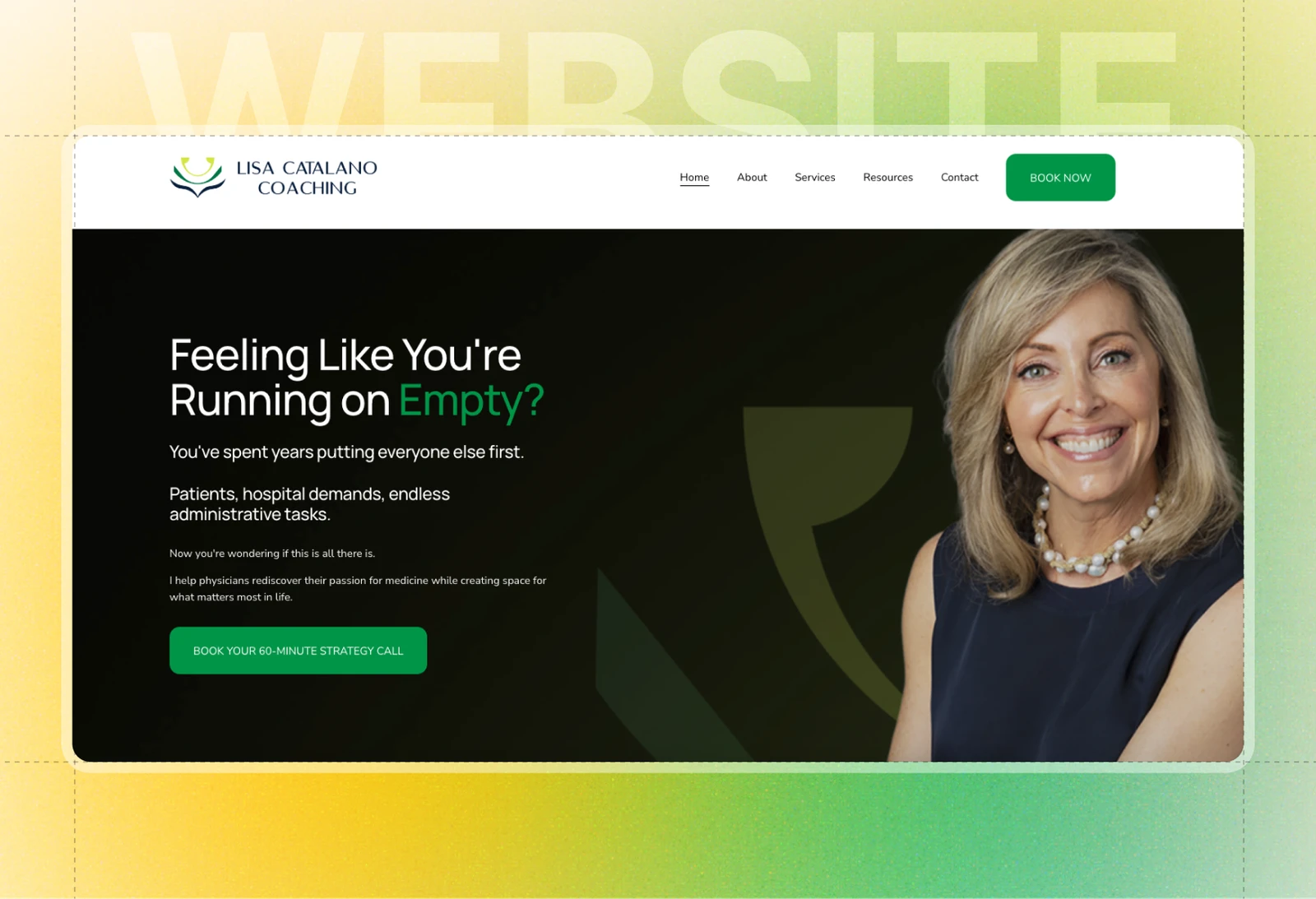
When we designed the identity for Lisa Catalano Coaching, the goal was to feel credible to high-achieving physicians while staying warm and human, not clinical. The mark combines a stethoscope-like form with two people facing each other, and the same system runs across her website, LinkedIn, social content and e-books.
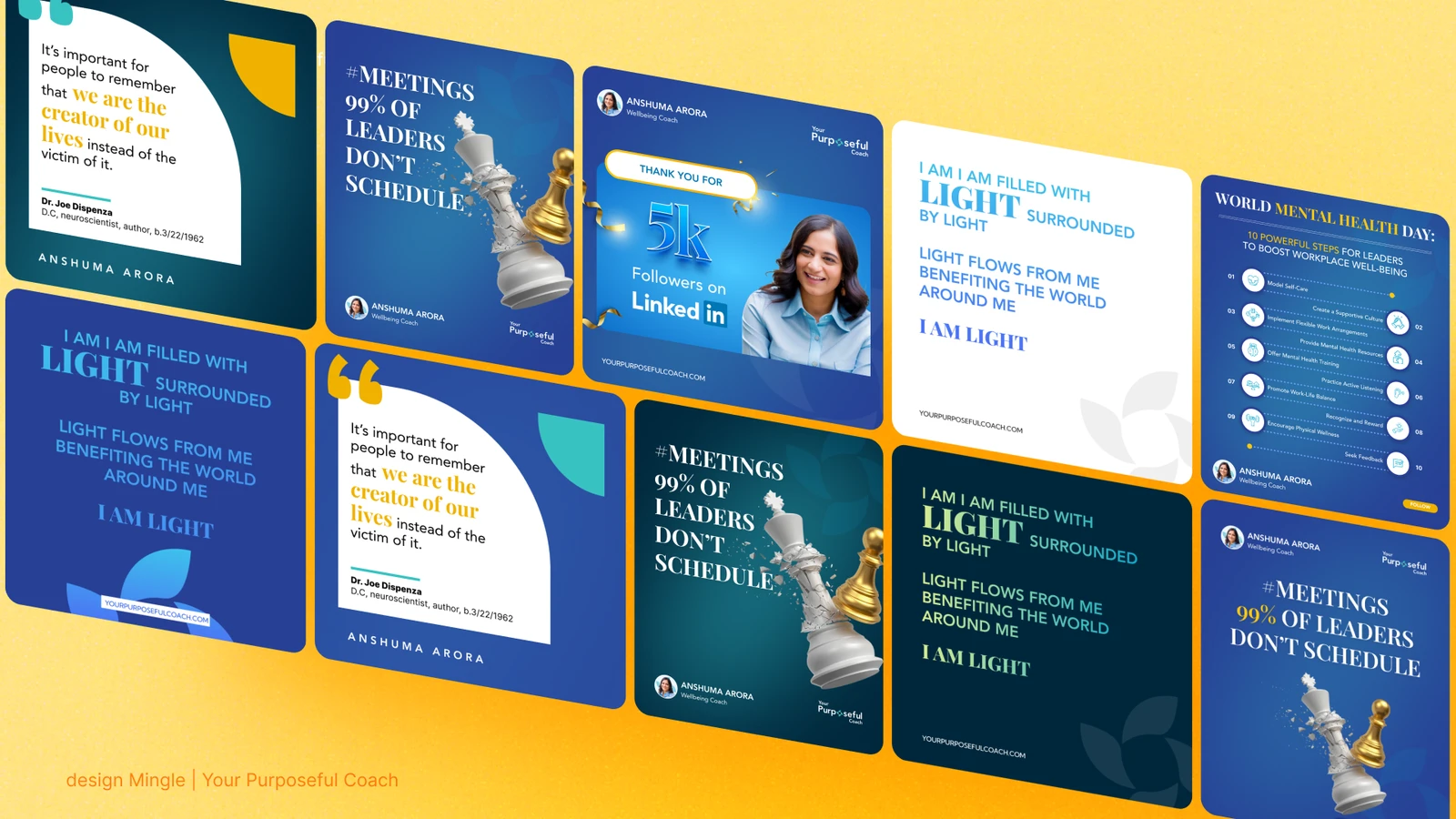
For Your Purposeful Coach, Anshuma Arora needed to appeal to high-performing leaders without the cold corporate feel common in executive coaching. Calm colours, a purposeful symbol and consistent content templates give her the authority of a leadership expert and the approachability of a guide.
How to show authority on LinkedIn and in your content
Authority grows when people repeatedly see you thinking clearly about their problems. A few habits make a big difference:
- Pick three or four content pillars tied to your niche, for example burnout, leadership transitions and difficult conversations, and return to them often.
- Share frameworks, not just tips. A simple model or step-by-step process shows depth of expertise and is easy to remember and share.
- Tell anonymised client stories (with permission) that show the before, the turning point and the after.
- Take a point of view. Agreeing with everyone makes you forgettable. Respectfully challenging a common belief in your field makes you memorable.
- Use one recognisable visual style for carousels, quotes and covers so your posts are recognised before people read your name.
A 30-day plan to build trust online
| Week | Focus | Actions |
|---|---|---|
| Week 1 | Clarity | Write your one-sentence positioning. Update your LinkedIn headline and website hero to match it. |
| Week 2 | Proof | Collect five testimonials with names, roles and photos. Ask two clients for short video testimonials. |
| Week 3 | Consistency | Align photos, colours and fonts across your website, LinkedIn banner and Featured images. |
| Week 4 | Visibility | Publish two branded posts a week on your content pillars and add a booking link everywhere. |
Trust killers to remove today
- Broken links, "coming soon" pages and outdated event dates.
- Stock photos of strangers in place of your own photos.
- Different logos or colours on your website and LinkedIn.
- Long paragraphs about yourself before you mention the client's problem.
- No testimonials, or testimonials hidden on a separate page.
- No clear way to book or contact you.
Bringing it together
Trust and authority aren't built by one big gesture. They come from many small, consistent signals across your brand, website, LinkedIn and content. The good news is that once the foundations are designed properly, they keep working for you every day, with every visitor.
We design brands, websites and LinkedIn presences for coaches, built so the right clients trust your expertise before the first call.
Frequently asked questions
How do coaches build credibility online?
Combine a professional, consistent brand with specific positioning and visible proof: testimonials with names and faces, case studies, credentials and published thinking such as articles or LinkedIn posts.
Does website design really affect trust?
Yes. Research on first impressions shows people judge a web page's visual appeal within a fraction of a second, and many people cite design when assessing a site's credibility. For a high-trust service like coaching, design is part of the first impression.
What is the fastest way to look more professional as a coach?
Professional photos, a consistent visual identity used everywhere, an updated LinkedIn profile and a website with a clear offer and booking link. These changes are visible immediately to every prospect.
How many testimonials does a coach need?
Start with three to five strong testimonials that include full names, roles and photos, ideally covering your main client types. Add short video testimonials when you can; they are the most persuasive format.

Sabbir Hossien is the founder of DesignMingle, a design studio that builds brands, websites, LinkedIn presences and content for coaches. Every identity starts with hand sketches and is built as a long-term brand asset.
Connect on LinkedIn