
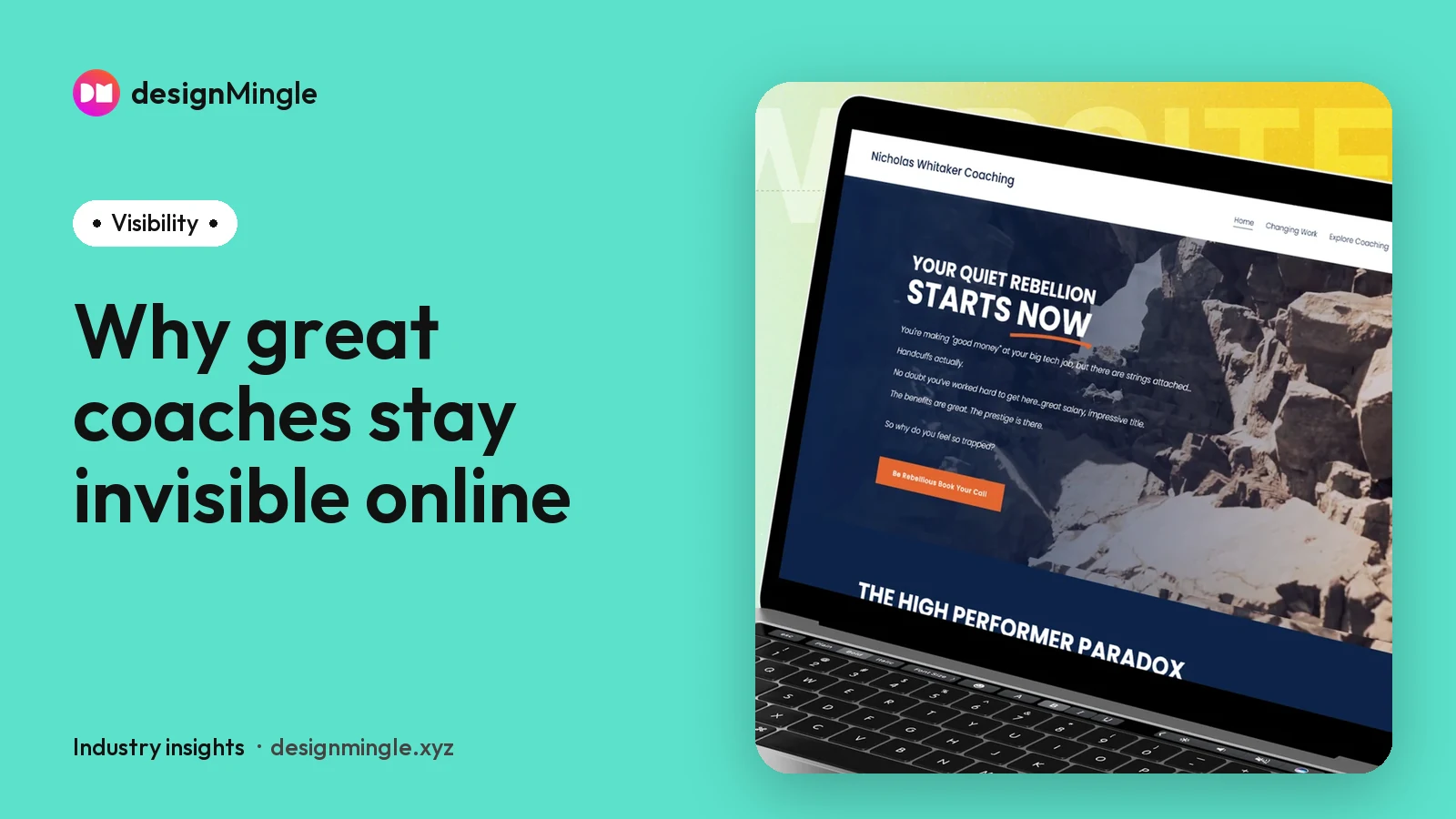
- Online visibility is not about posting more. It is about being easy to find, easy to understand and easy to trust once someone lands on your profile or website.
- Most invisible coaches have the same four gaps: an unclear niche, an inconsistent brand, a website that doesn't explain the offer, and a LinkedIn profile that reads like a CV.
- Prospects check you in several places before they book. Every touchpoint has to tell the same story.
- Fix the foundations first (positioning, brand, website, LinkedIn), then add consistent content on top.
You can be an excellent coach and still be almost invisible online. We see it every week: coaches with ICF credentials, years of corporate leadership experience and glowing client results, whose online presence is a two-page website from five years ago and a LinkedIn profile that hasn't been touched since their last job.
The problem isn't talent. It's that the internet can't see what your clients see in a session. This guide explains why that happens and the practical steps to become visible to the people who should be hiring you.
What does online visibility actually mean for a coach?
Online visibility for coaches is the combination of three things:
- Discoverability. Can the right person find you when they search your name, your niche or a problem you solve, on Google, on LinkedIn or in an AI assistant?
- Clarity. When they land on your profile or website, do they understand in a few seconds who you help and how?
- Credibility. Does everything they see make them trust you enough to book a call?
Most advice focuses only on the first one ("post more", "do SEO"). But visibility without clarity and credibility just sends more people to a page that doesn't convince them. Being seen is only useful if what people see makes them want to work with you.
Why are so many skilled coaches invisible online?
The coaching market is crowded. The International Coaching Federation's 2023 Global Coaching Study estimated around 109,200 coach practitioners worldwide in 2022, a big jump from three years earlier. That growth means your future clients are choosing between many qualified people, and they usually decide based on what they can see online before they ever speak to you.
When we audit coaching businesses, the same four gaps come up again and again.
1. The niche isn't clear
"I help people unlock their potential" could describe thousands of coaches. Search engines, LinkedIn's algorithm and human readers all need something specific to hold on to: who you help, what changes for them and why you are the right person. A coach for "physicians navigating burnout and midlife change" is far easier to find, remember and refer than a generic life coach.
2. The brand looks different everywhere
A logo made in a free tool, different colours on the website and LinkedIn banner, a mix of fonts in every PDF. Each piece on its own might be fine, but together they make a coaching business look like a side project. Consistency is what makes a small business look established.
3. The website doesn't do its job
Many coaching websites read like an online CV: a long biography, a list of certifications and a contact form. Visitors leave without understanding the offer, the process or what to do next. A website should guide a stranger from "who is this?" to "I'd like to book a call."
4. LinkedIn looks like a job profile
For coaches who work with professionals, leaders and companies, LinkedIn is often the first place a prospect checks. If your headline still says your old job title and your banner is the default blue, you're sending the wrong signal to the exact people you want to reach.
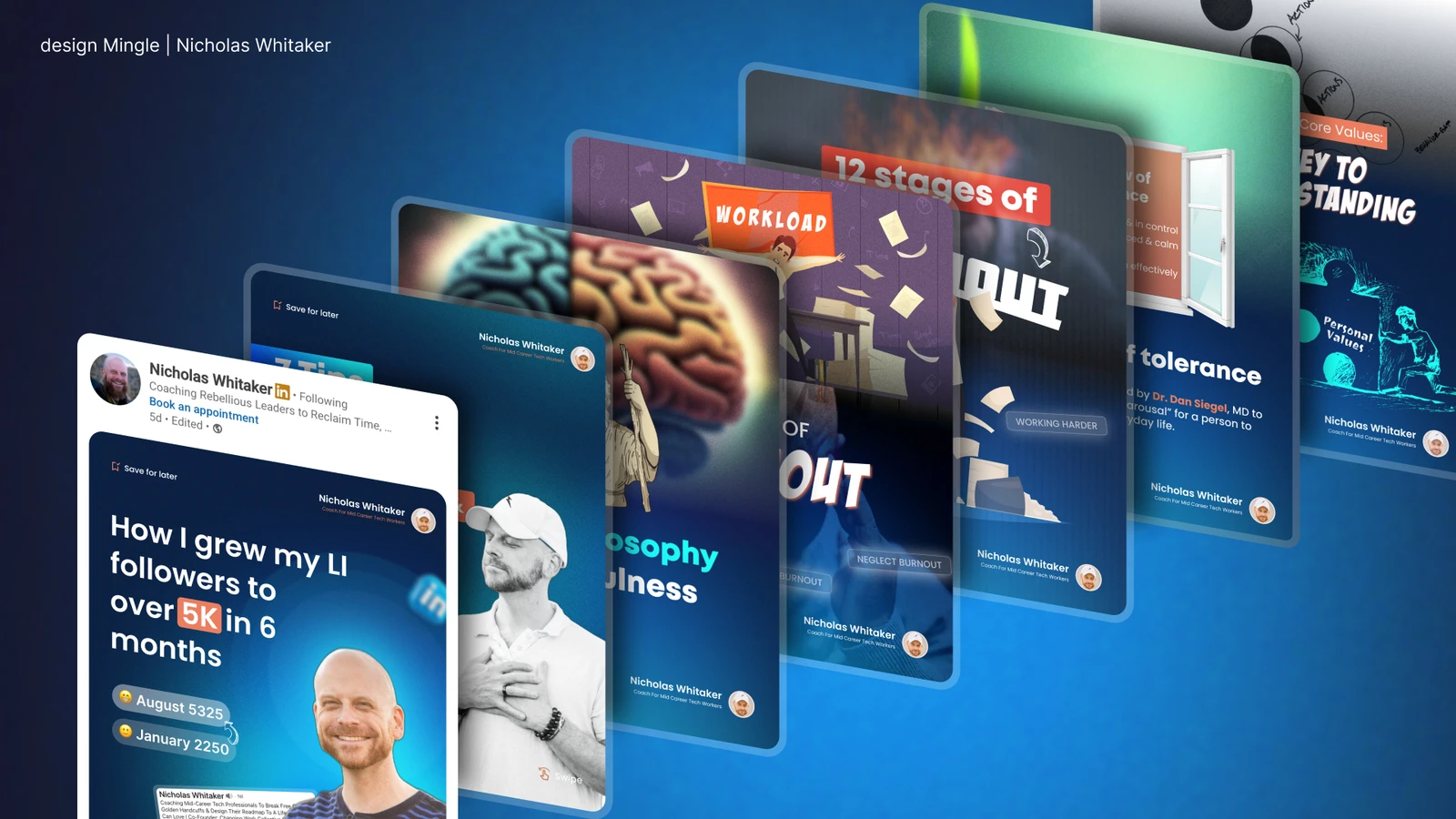
How do potential clients actually find and check a coach?
Very few people book a coach after a single touchpoint. A more typical path looks like this:
- They see a post, a podcast episode or a recommendation and click your name.
- They scan your LinkedIn profile: photo, headline, banner, About section, Featured links.
- They visit your website to understand your offer, approach and results.
- They look for proof: testimonials, case studies, credentials, media.
- Only then do they book a discovery call, or quietly move on.
Each step is a chance to build trust or to lose it. Visibility comes from making every step consistent, clear and credible, so the journey from "who is this?" to "let's talk" has no weak link.
A practical plan to fix your online visibility
Here's the order we recommend. It saves money because each step makes the next one more effective.
Step 1: Sharpen your positioning
Write one sentence that names your ideal client, their problem and the outcome you create. Use it everywhere: your LinkedIn headline, your website hero, your email signature. If you can't write that sentence yet, no amount of design or content will fix the visibility problem.
Step 2: Build a brand that looks like you've been doing this for years
A professional identity (logo, colours, typography and a few rules for using them) is the fastest way to look established. It also makes every future piece of content quicker to produce. Read our guide to building a coaching brand identity for the full process.
Step 3: Turn your website into a booking engine
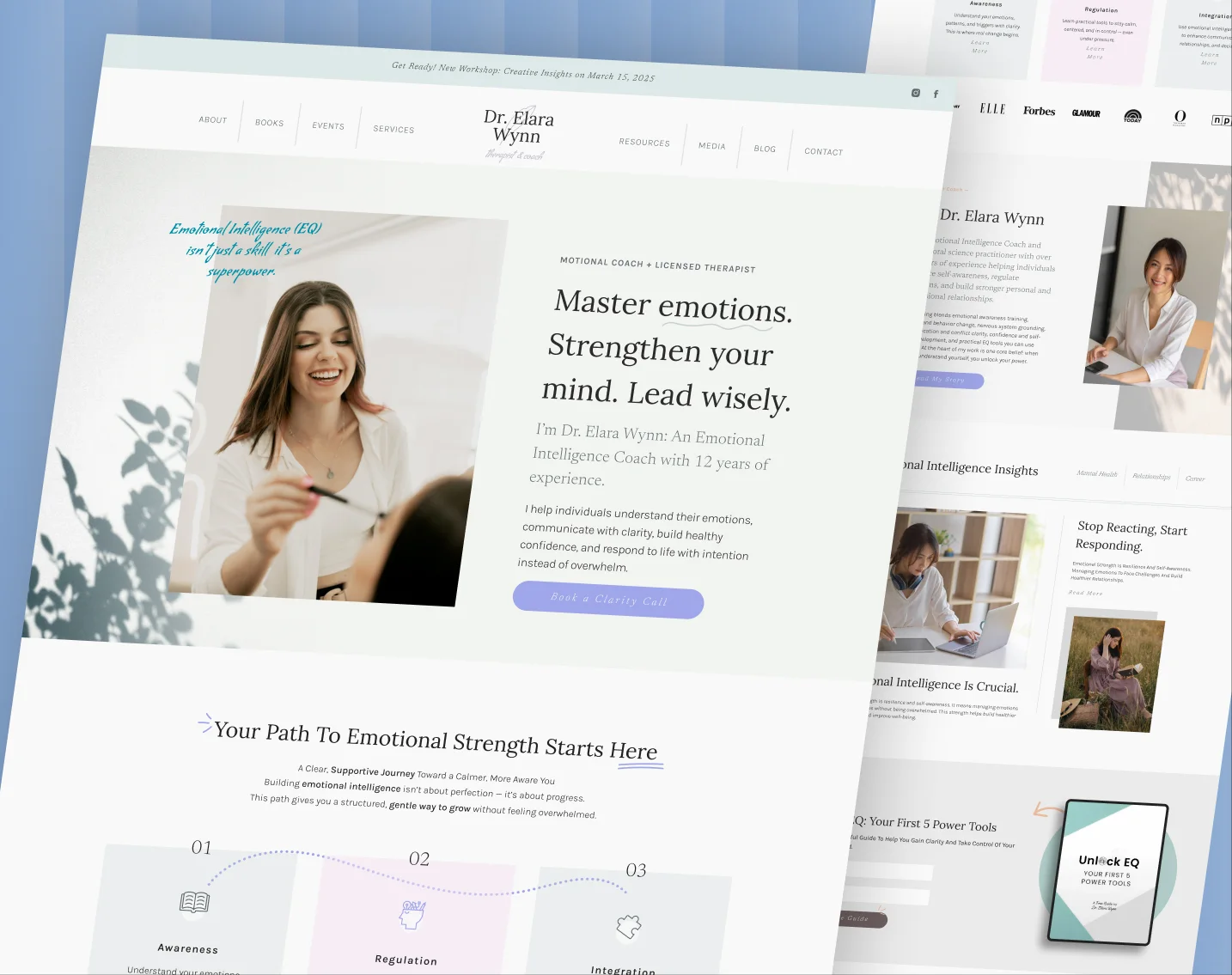
Your website is the one place online that you fully control. It should explain your offer clearly, show proof and make booking a call effortless. Our article on coaching website design lists the pages and elements that matter most.
Step 4: Make LinkedIn your shop window
Update your photo, banner, headline, About section and Featured links so your profile works as a mini landing page. See the full LinkedIn profile guide for coaches.
Step 5: Show up consistently with branded content
Once the foundations are in place, regular content (carousels, single-image posts, short videos, articles) multiplies your reach. Because it all uses the same brand system, every post reinforces recognition instead of starting from zero.
Visibility in AI search: the new front door
More people now ask ChatGPT, Perplexity, Gemini or Google's AI Overviews questions like "who is a good leadership coach for new managers?" These tools summarise information they can find and understand. Coaches who describe their niche clearly and consistently across their website, LinkedIn and published articles are easier for these tools to understand and mention.
You don't need technical tricks. You need the same things that help humans: a clear niche, consistent descriptions of what you do, real proof and helpful content that answers your clients' questions.
Common mistakes that keep coaches invisible
- Waiting until the brand feels "perfect" before showing up anywhere.
- Posting regularly while the profile and website still look outdated.
- Describing your work differently on every platform.
- Hiding testimonials and results on a page nobody visits.
- Using DIY visuals that look different every time.
- Having no clear next step: no booking link, no lead magnet, no call to action.
Where to start this week
If you only have an hour, do three things: rewrite your LinkedIn headline with your one-sentence positioning, add a booking link to your profile and website, and collect three recent client testimonials. Then plan the bigger work: brand, website and content system.
Book a free 30-minute strategy call. We'll look at your brand, website and LinkedIn and show you the highest-impact fixes.
Frequently asked questions
How can a coach get more visibility online?
Start with a clear niche and one-sentence positioning, then make your brand, website and LinkedIn profile tell the same story. Once those foundations are consistent, publish regular branded content where your ideal clients spend time, usually LinkedIn for coaches who work with professionals.
Is LinkedIn or a website more important for coaches?
You need both. LinkedIn is where many prospects discover and first check you; your website is where they understand your offer in depth and book. A strong LinkedIn profile that links to a weak website loses people at the last step.
How long does it take to improve online visibility?
Foundations such as a brand identity, website and LinkedIn profile can usually be completed in a few weeks. Search rankings, AI mentions and audience growth build over months of consistent publishing.
Do coaches need SEO?
Coaches benefit from the basics: a fast, mobile-friendly website, clear page titles, helpful articles that answer client questions and consistent information about who you help. These also help AI assistants understand and recommend you.

Sabbir Hossien is the founder of DesignMingle, a design studio that builds brands, websites, LinkedIn presences and content for coaches. Every identity starts with hand sketches and is built as a long-term brand asset.
Connect on LinkedIn