
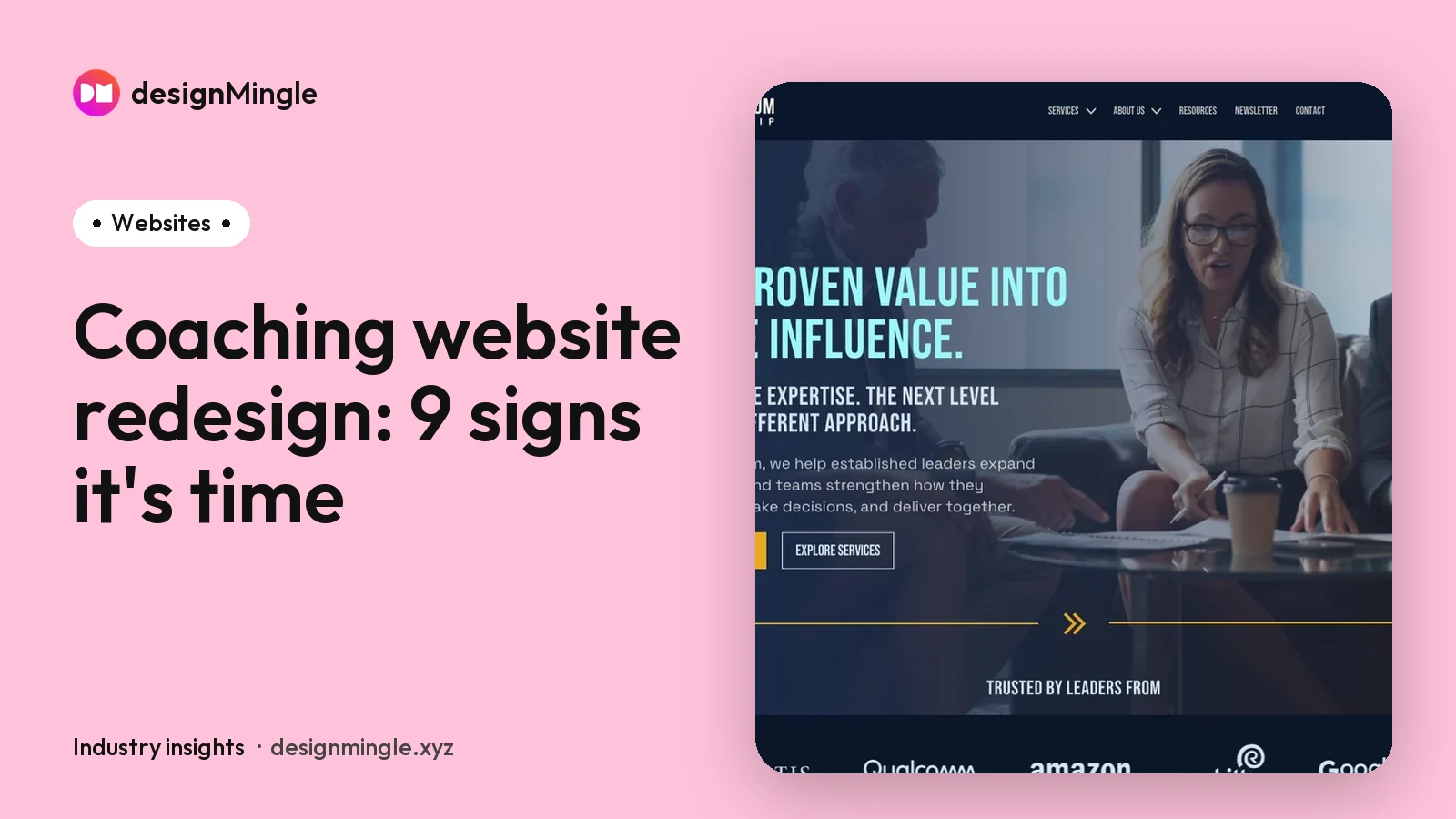
- Redesign when your website no longer matches the level of clients you want, not just when it looks dated.
- The most common signs: visitors don't book calls, the offer is unclear, the site isn't built for mobile, and it doesn't match your LinkedIn.
- Fix the message and structure first, then the visual design. A prettier version of an unclear site still won't convert.
- A focused coaching website redesign usually takes two to three weeks when your content and goals are clear.
Many coaches build their first website in a weekend, from a template, before they really know who their ideal client is. A few years later the coaching has grown, the clients are more senior and the fees are higher, but the website still describes the coach they were when they started.
A coaching website redesign closes that gap. This guide covers the signs it's time, what to fix first and how the process works, so you can decide whether you need a refresh or a full rebuild.
How do you know your coaching website needs a redesign?
You need a coaching website redesign when the site stops helping you win the clients you want. Look for these nine signs:
- People visit but rarely book a call. Traffic without enquiries usually means an unclear offer or a hidden next step.
- You can't explain who it's for in one line. If the homepage headline says "I help people reach their potential", visitors can't tell if you're for them.
- You're embarrassed to share the link. If you send prospects to LinkedIn instead of your website, the website has already lost.
- Your niche or offer has changed. Corporate clients, group programmes or speaking need different pages than 1:1 life coaching.
- It looks different from your LinkedIn and materials. Inconsistent colours, photos and messaging make an established coach look new.
- It's hard to read on a phone. Most first visits happen on mobile, often straight from LinkedIn.
- You can't update it yourself. If small text changes need a developer, the site goes stale.
- Proof is buried. Testimonials, client logos and credentials sit at the bottom of one page.
- It doesn't show up when people search your name or niche. Missing page titles, descriptions and structure keep you invisible to Google and AI assistants.
Redesign or refresh: which do you need?
A refresh updates the visual layer: new photos, colours, fonts and some copy, on the same structure. It works when your message and audience are still right and the site already converts.
A redesign rebuilds the structure, copy flow and design around your current clients and offers. You need one when the business has changed: a new niche, a move from 1:1 to executive or team coaching, or a rebrand. When Anshuma Arora's practice grew into executive and team coaching, a refresh of Your Purposeful Coach wouldn't have been enough. She needed a new brand, Co-Momentum Leadership, and a website built for the organisations she now serves.

What should you fix first in a coaching website redesign?
Fix things in this order, because each layer depends on the one before it:
- Positioning. Who you help, the problem you solve and the result you create, in plain words.
- Structure. The pages and the order of sections that answer a prospect's questions: is this for me, can they help, can I trust them, what do I do next?
- Proof. Testimonials with names and photos, client logos, credentials and short case stories, placed early.
- One clear next step. Usually a free discovery or strategy call, repeated through the page.
- Visual design. A brand that matches your fees and your LinkedIn, fast and easy to read on mobile.
- Search basics. Page titles, descriptions, headings and structured data so Google and AI assistants understand what you offer.
How does a coaching website redesign work?
At DesignMingle a typical redesign has four steps:
- Audit and discovery call: we review your current site, LinkedIn and analytics, and agree what to keep.
- Structure and copy flow: a page plan built around your ideal client's questions.
- Design and build: on Framer, Squarespace or Wix, with your brand applied consistently.
- Launch and handover: redirects from old pages so you don't lose search traffic, plus a walkthrough so you can edit it yourself.
With content and goals clear, this usually takes two to three weeks.
Don't lose your search traffic
If your old site has been live for a while, some pages may already rank on Google. Before launch, list your old URLs and redirect each one to its closest new page with a permanent (301) redirect. Then submit the new sitemap in Google Search Console so the new pages are found quickly.
We review your current site on a free strategy call and tell you honestly whether you need a refresh or a full redesign.
Frequently asked questions
How often should a coach redesign their website?
There's no fixed schedule. Most coaches need a redesign every three to five years, or sooner when their niche, offers or ideal client changes. Redesign when the site no longer matches the clients you want to attract.
How long does a coaching website redesign take?
Usually two to three weeks from kickoff to launch when your goals and content are clear. Larger sites with many programme pages or a full rebrand can take longer.
Will I lose my Google rankings if I redesign my website?
Not if the redesign keeps or improves your content and every old URL is redirected to its closest new page with a 301 redirect. Submit the new sitemap in Google Search Console after launch.
Should I redesign my website or my brand first?
If your positioning or audience has changed, start with the brand so the website is built on the right foundation. If your brand still fits, you can redesign the website on its own.

Sabbir Hossien is the founder of DesignMingle, a design studio that builds brands, websites, LinkedIn presences and content for coaches. Every identity starts with hand sketches and is built as a long-term brand asset.
Connect on LinkedIn