
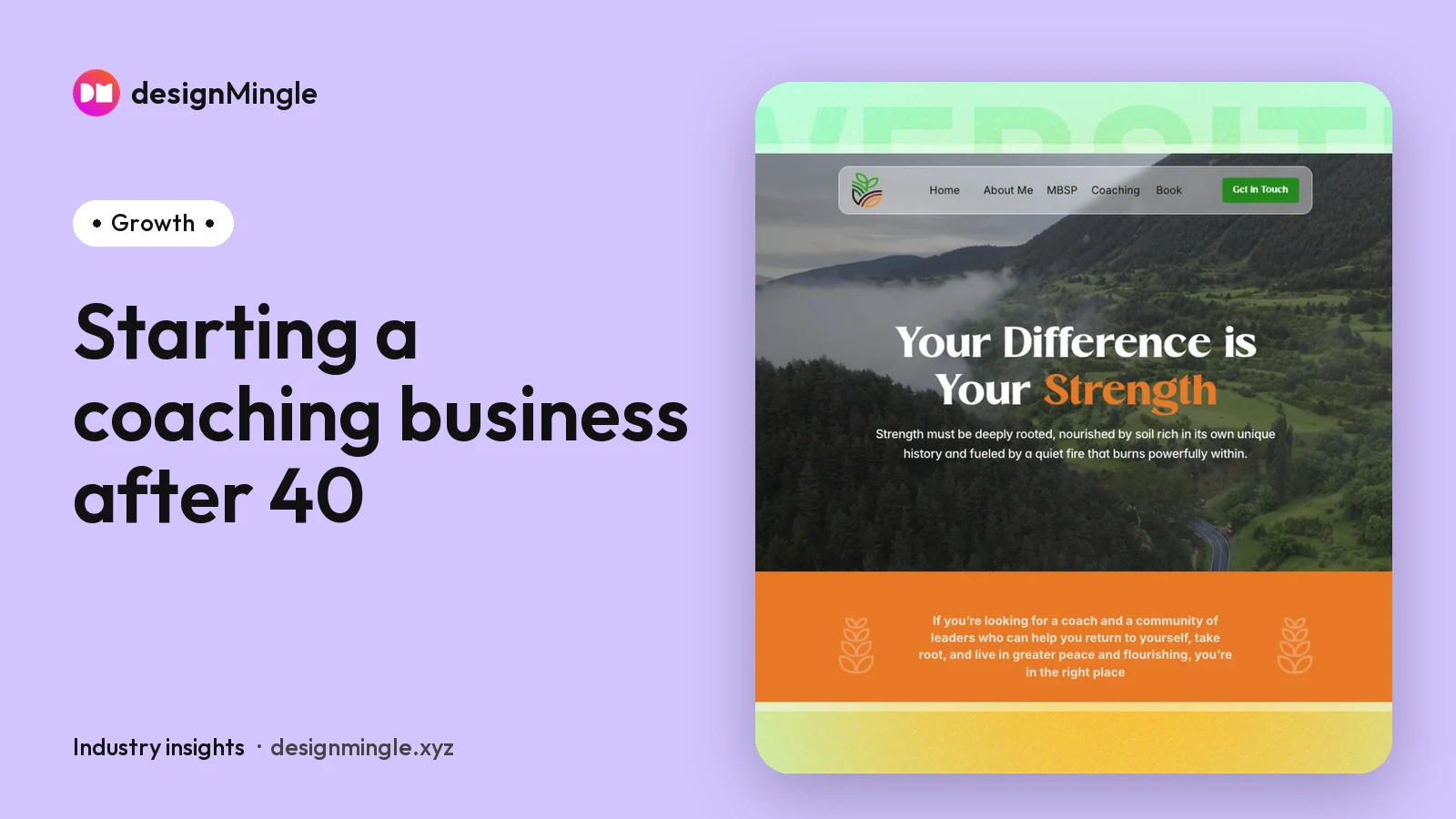
- Coaches who start after 40 have an advantage: real experience. The challenge is making it visible online.
- Clients check your website and LinkedIn before they book. Both need to tell the same, clear story.
- Start with four foundations: a clear niche, a simple brand, a website with one next step and an optimised LinkedIn profile.
- Consistency beats volume. Two or three useful posts a week in one visual style builds recognition.
More and more coaches are starting their practice in their 40s, 50s and 60s, after careers as executives, HR leaders, engineers, physicians or entrepreneurs. They bring something younger coaches can't: decades of real-world experience.
Yet many of them struggle with the same thing: their online presence doesn't reflect that experience. This guide shows how to fix that, whether you're just starting or your coaching business has been running for a few years.
Is 40+ a good age to start a coaching business?
Yes. Many of the most successful coaches start after a long first career, because their clients want someone who has faced the same challenges. A former tech executive coaching new leaders, or a physician coaching doctors through burnout, has instant credibility in a sales conversation.
The gap is usually online. A coach with 25 years of leadership experience can look like a beginner if their website is a template, their LinkedIn still shows a past job title and their materials don't match.
Why does online presence matter so much for coaching business growth?
Because almost every prospect checks you before they reach out. They read your LinkedIn, visit your website, look for testimonials and decide in minutes whether you feel credible and right for them. Referrals still matter, but even referred clients look you up first.
The four foundations to build first
- A clear niche and message. Who you help, the problem and the result. "I help newly promoted directors lead with confidence" beats "I help people reach their potential".
- A simple, professional brand. A logo, colours, fonts and photography that look as established as your experience.
- A website with one next step. Clear offer, proof early and an easy way to book a discovery call. See our guide to coaching website design.
- An optimised LinkedIn profile. A headline that names who you help, a branded banner, an About section that speaks to clients and Featured cards that point to a call. See LinkedIn profile optimization for coaches.
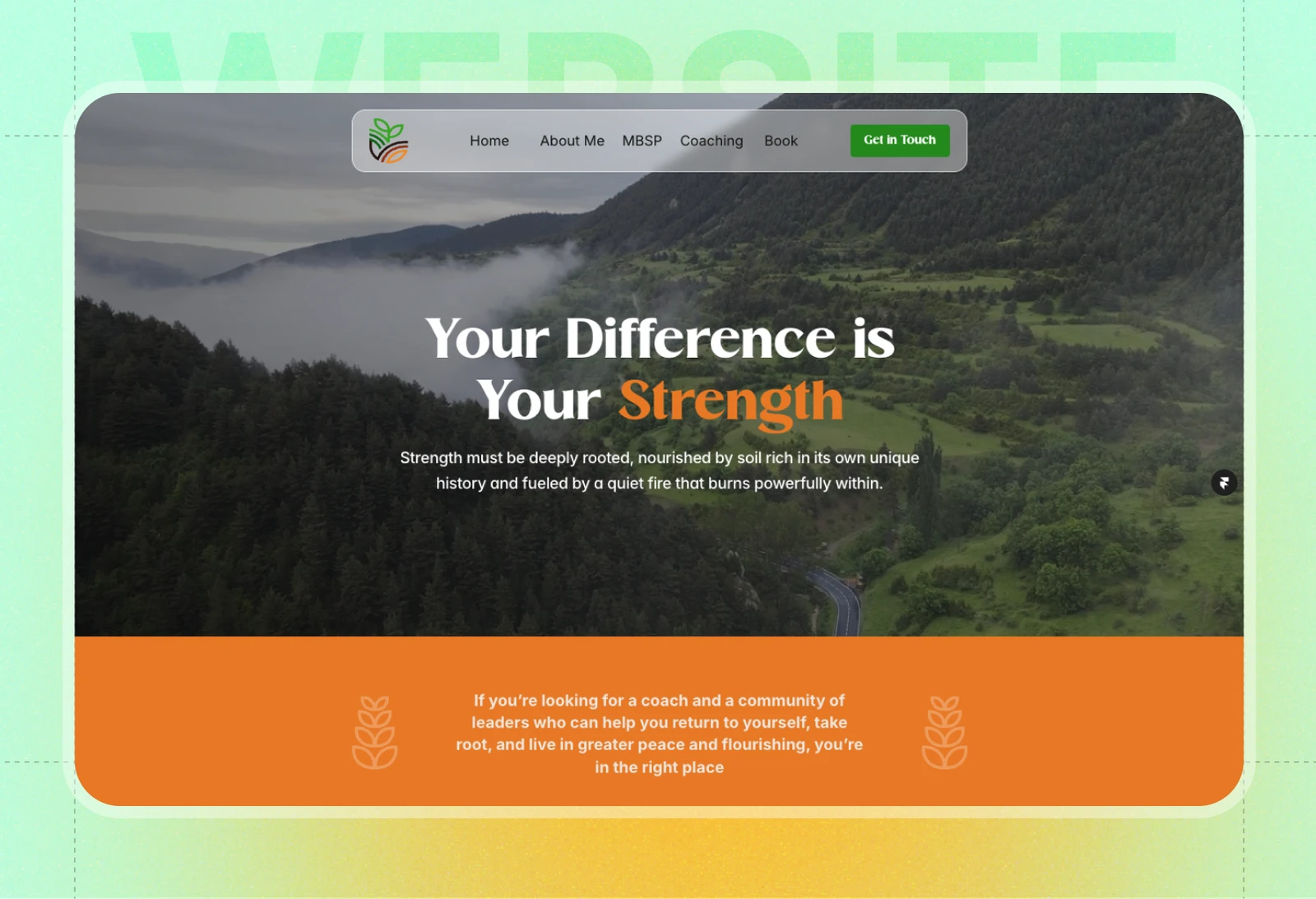
Turn your first career into proof
Your previous career isn't something to hide. It's your strongest proof. Show it clearly:
- Name the industries and companies you've worked in, or the level you led at.
- Translate corporate achievements into what they mean for clients.
- Add certifications such as ICF credentials alongside real experience.
- Collect testimonials from mentees, former team members and early clients.
- Use recent, professional photos that match your brand.
Growing an existing coaching business
If you've been coaching for a while, growth usually stalls for one of three reasons: the brand was built for a different niche, the website doesn't explain your current offers, or you're relying only on referrals. A focused update to the brand, website and LinkedIn, followed by consistent content, is often the fastest way to reach the next level of clients. That's what we did for Co-Momentum Leadership and Wainwright Yu.
A simple 90-day plan
- Weeks 1 to 3: define your niche and message, then create your brand and website.
- Week 4: optimise your LinkedIn profile to match.
- Weeks 5 to 12: post two or three times a week in one visual style, and invite every warm contact to a conversation.
We build the brand, website and LinkedIn presence together, so you look established from day one.
Frequently asked questions
Is it too late to start a coaching business after 40 or 50?
No. Many successful coaches start after a long first career, and that experience is often what clients are paying for. What matters is showing it clearly online.
What do I need to start a coaching business online?
A clear niche and message, a simple professional brand, a website with a way to book a call and an optimised LinkedIn profile. Content and a lead magnet come next.
How do coaches over 40 get clients?
Most start with their professional network and LinkedIn, then grow through referrals, content and speaking. A credible website and LinkedIn profile make every one of those channels work better.
How can I grow my coaching business faster?
Make sure your brand, website and LinkedIn match the clients you want now, give people one clear next step, and publish useful content consistently. Then add a lead magnet to grow your email list.

Sabbir Hossien is the founder of DesignMingle, a design studio that builds brands, websites, LinkedIn presences and content for coaches. Every identity starts with hand sketches and is built as a long-term brand asset.
Connect on LinkedIn